Introduction: From Viewing to Experiencing Space
Traditional architectural presentations rely on fixed perspectives—plans, sections, and static renderings. While these tools are effective, they often limit the viewer’s understanding of space.
A single image shows only one angle. It frames the design from a controlled viewpoint, leaving the rest to imagination.
This is where 360° panoramic renders redefine the experience.
Instead of looking at a space, users can explore it. They can turn, navigate, and observe the environment from different angles—just as they would in real life.
This shift from passive viewing to active exploration makes panoramic renders one of the most powerful tools in modern architectural visualization.
What are 360° Panoramic Renders?
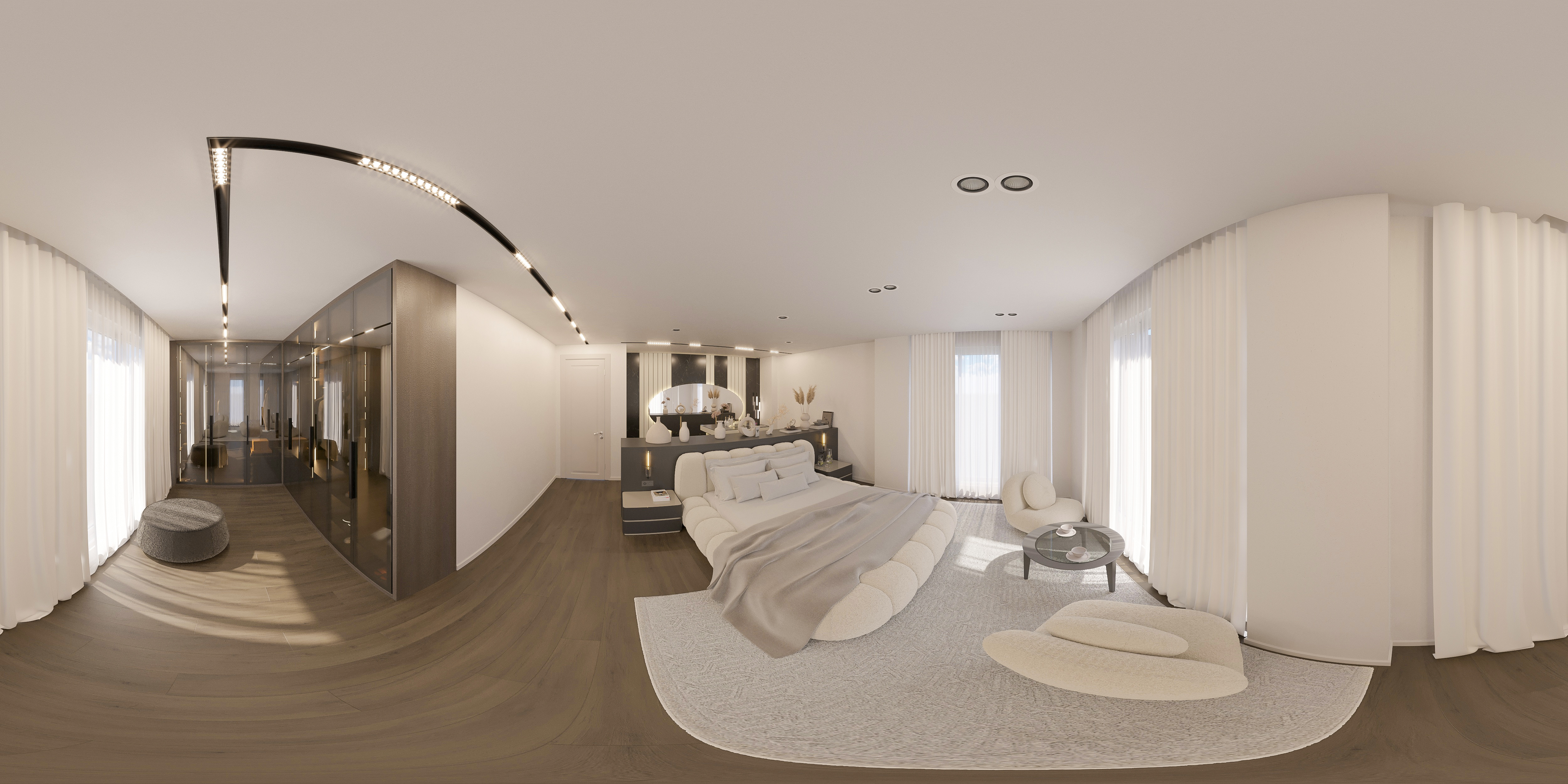
360° panoramic renders are interactive visualizations that allow users to view a space in all directions from a fixed point.
Users can:
- Rotate the view
- Look up and down
- Explore the environment freely
Unlike animations, panoramic renders do not follow a predefined path. Instead, they give control to the user.
How 360° Renders Work
A panoramic render is created by combining multiple images into a seamless spherical view.
Key components:
- 3D model
- Lighting setup
- Rendering engine
- Interactive viewer
The result is an immersive experience accessible through:
- Web browsers
- Mobile devices
- VR headsets
Why 360° Renders are Important
1. Improved Spatial Understanding
Users can explore the space naturally.
- Better perception of scale
- Clear understanding of layout
- Realistic spatial relationships
2. Interactive Experience
Unlike static images, users control their view.
- Increased engagement
- Personalized exploration
- Higher user involvement
3. Better Client Communication
Clients often struggle with technical drawings.
360° renders provide:
- Clear visual understanding
- Reduced confusion
- Faster decision-making
4. Strong Marketing Tool
Panoramic renders are highly effective in marketing.
Used in:
- Real estate listings
- Project presentations
- Online portfolios
They create a more memorable experience.
Advantages Over Traditional Renderings
Static Renders:
- Fixed viewpoint
- Limited perspective
360° Renders:
- Full spatial awareness
- Interactive navigation
This makes them more immersive and informative.
Applications in Architecture and Design
Residential Projects
- Show interior layouts
- Present living experience
Commercial Projects
- Demonstrate customer flow
- Highlight branding elements
Real Estate Marketing
- Virtual tours
- Pre-construction sales
Hospitality Design
- Showcase atmosphere
- Enhance emotional connection
Key Elements of High-Quality Panoramic Renders
1. Accurate Lighting
Lighting must feel natural and consistent.
2. Realistic Materials
Materials should reflect real-world properties.
3. Proper Camera Position
The viewpoint affects perception.
- Eye-level positioning
- Central placement
4. Seamless Stitching
No visible distortions or transitions.
5. Optimization
Files should load quickly without losing quality.
Integration with Virtual Reality
360° renders can be used with VR technology.
Benefits:
- Fully immersive experience
- Real-time interaction
- Enhanced presentation
VR takes panoramic rendering to the next level.
Common Mistakes
Poor resolution
Reduces immersion.
Incorrect camera height
Creates unrealistic perspective.
Overcomplicated scenes
Confuses users.
Lack of interactivity
Reduces engagement.
Workflow of 360° Rendering
Step 1: 3D Modeling
Prepare accurate geometry.
Step 2: Lighting Setup
Ensure realistic illumination.
Step 3: Rendering
Generate panoramic images.
Step 4: Integration
Upload to interactive platforms.
Role of Visualization Professionals
Experts ensure:
- Realistic output
- Technical accuracy
- Smooth user experience
Their role is essential for high-quality results.
Future Trends
- Real-time interactive environments
- AI-enhanced rendering
- VR and AR integration
- Cloud-based visualization
Panoramic rendering is becoming more advanced and accessible.
Practical Tips
- Keep navigation simple
- Use high-quality lighting
- Optimize performance
- Test on different devices
- Focus on user experience
Conclusion: Experiencing Space Before It Exists
360° panoramic renders transform the way we understand architecture.
They allow users to:
- Explore spaces
- Make informed decisions
- Connect emotionally with design
In modern design communication, seeing is no longer enough users want to experience space before it is built.