Introduction: Light Beyond Interiors
Lighting does not end at the interior. Exterior lighting plays a crucial role in how a building is perceived, experienced, and used after sunset.
A well-designed exterior lighting system does more than illuminate—it defines boundaries, enhances architecture, improves safety, and creates atmosphere.
However, exterior lighting design presents a unique challenge:
How do you balance safety and aesthetics without compromising either?
Too much focus on safety can result in harsh, overlit environments. Too much focus on aesthetics can lead to dark, unsafe areas. The key lies in designing a system where both aspects support each other.
The Role of Exterior Lighting
Exterior lighting serves multiple purposes simultaneously.
Core functions:
- Safety and security
- Wayfinding and orientation
- Architectural highlighting
- Atmosphere creation
- Outdoor usability
A successful lighting design integrates all these functions into a cohesive system.
Safety in Exterior Lighting Design
Safety is one of the primary reasons for exterior lighting.
Key safety objectives:
1. Visibility
Users must be able to clearly see paths, steps, and obstacles.
2. Wayfinding
Lighting should guide people naturally through the space.
3. Security
Well-lit areas reduce the risk of accidents and unwanted activity.
4. Comfort
Lighting should prevent glare and excessive contrast.
Critical areas to illuminate:
- Entrances and exits
- Pathways and walkways
- Stairs and level changes
- Parking areas
- Building perimeters
These zones require consistent and reliable lighting.
Aesthetics in Exterior Lighting
While safety is essential, aesthetics define how a space feels.
Exterior lighting contributes to:
- Architectural expression
- Visual identity
- Nighttime atmosphere
- Landscape integration
Key aesthetic goals:
- Highlight architectural features
- Create depth and contrast
- Emphasize materials and textures
- Enhance outdoor experience
Lighting can transform a building into a nighttime landmark.
Strategies to Balance Safety and Aesthetics
1. Layered Exterior Lighting
Just like interior lighting, exterior lighting benefits from layering.
- General lighting → overall visibility
- Functional lighting → pathways and entrances
- Accent lighting → architectural features
Layering prevents overlighting while maintaining safety.
2. Avoid Overlighting
More light does not always mean better safety.
Problems with overlighting:
- Glare
- Visual discomfort
- Energy waste
- Loss of atmosphere
The goal is controlled illumination, not brightness.
3. Use Indirect Lighting
Indirect lighting improves comfort and aesthetics.
- Reduces glare
- Creates softer light distribution
- Enhances architectural surfaces
Examples:
- Wall washers
- Hidden LED strips
- Ground-reflected lighting
4. Define Hierarchy
Not all areas require the same level of lighting.
- Primary paths → higher illumination
- Secondary areas → softer lighting
- Feature elements → accent lighting
Hierarchy improves both usability and visual clarity.
5. Consider Human Eye Adaptation
The human eye adapts to light levels gradually.
Sudden changes in brightness can cause discomfort.
Solution:
- Use gradual transitions
- Avoid extreme contrast
- Maintain consistent lighting levels
Lighting Techniques in Exterior Design
Uplighting
Used to highlight vertical elements such as:
- Facades
- Trees
- Columns
Creates dramatic effects.
Downlighting
Provides natural and functional illumination.
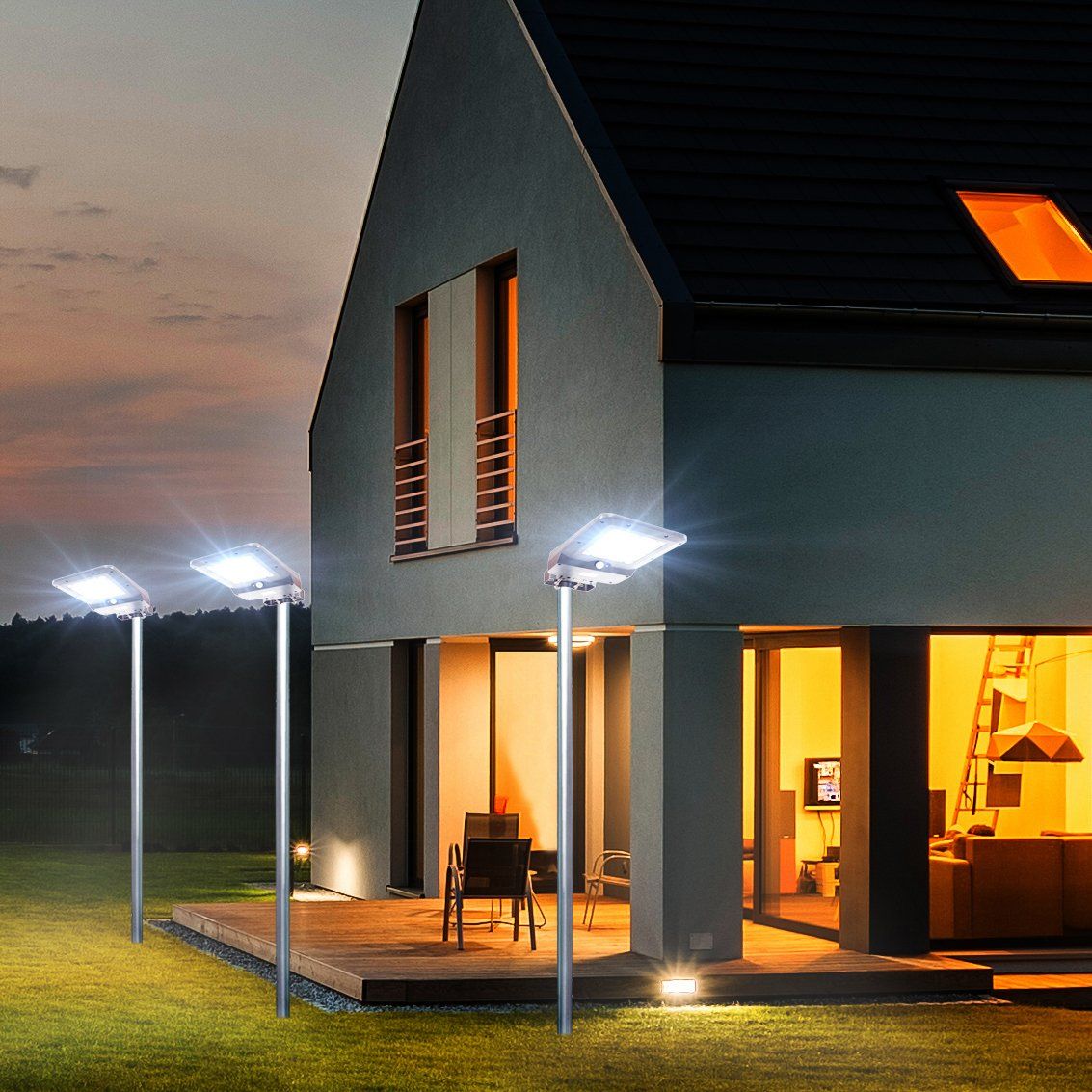
- Mounted on poles or structures
- Suitable for pathways and seating areas
Path Lighting
Guides movement and improves safety.
- Low-level fixtures
- Even spacing
- Soft illumination
Grazing Light
Highlights textures by casting shadows.
- Works well on stone, concrete, or textured walls
Material and Light Interaction
Exterior materials react differently to light.
- Rough surfaces → create shadows and depth
- Smooth surfaces → reflect light evenly
- Glass → reflects and transmits light
Understanding material behavior enhances design quality.
Energy Efficiency and Sustainability
Exterior lighting should be efficient.
Strategies:
- LED technology
- Motion sensors
- Timers and automation
- Solar-powered lighting
Efficient systems reduce environmental impact and operating costs.
Exterior Lighting in Different Contexts
Residential Projects
Focus:
- Safety
- Comfort
- Atmosphere
Soft and warm lighting is preferred.
Commercial Projects
Focus:
- Visibility
- Brand identity
- User guidance
Lighting must balance function and visual impact.
Public Spaces
Focus:
- Safety
- Accessibility
- Uniform illumination
Consistency is key.
Common Mistakes in Exterior Lighting
Overlighting
Too much brightness reduces comfort and wastes energy.
Poor fixture placement
Incorrect positioning creates shadows or glare.
Ignoring maintenance
Outdoor fixtures require durability and easy access.
Lack of planning
Lighting added after construction often leads to poor results.
The Role of Interior and Lighting Designers
Design professionals ensure that lighting is integrated from the beginning.
They:
- Analyze site conditions
- Define lighting strategies
- Select appropriate fixtures
- Coordinate with architecture
Lighting should be part of the design—not an afterthought.
Future Trends in Exterior Lighting
- Smart lighting systems
- Adaptive lighting based on usage
- Sustainable solutions
- Integration with landscape design
Exterior lighting is becoming more dynamic and responsive.
Practical Tips
- Plan lighting early in the project
- Focus on key areas first
- Avoid excessive brightness
- Use layered lighting
- Choose durable fixtures
- Test lighting scenarios
Conclusion: Light with Purpose
Exterior lighting design is about more than visibility—it is about creating a safe, comfortable, and visually engaging environment.
When safety and aesthetics are balanced:
- Spaces become usable
- Architecture becomes expressive
- Users feel secure and comfortable
Good lighting is not noticed—it is experienced.